
Modelling Greenland’s glaciers into global systems
The current generation of computer models of the Earth’s climate don’t fully capture how Greenland’s glaciers ‘feel’ the ocean. They often treat the glacier fronts as static, missing how ocean melting and iceberg calving interact with each other. We want to change that.
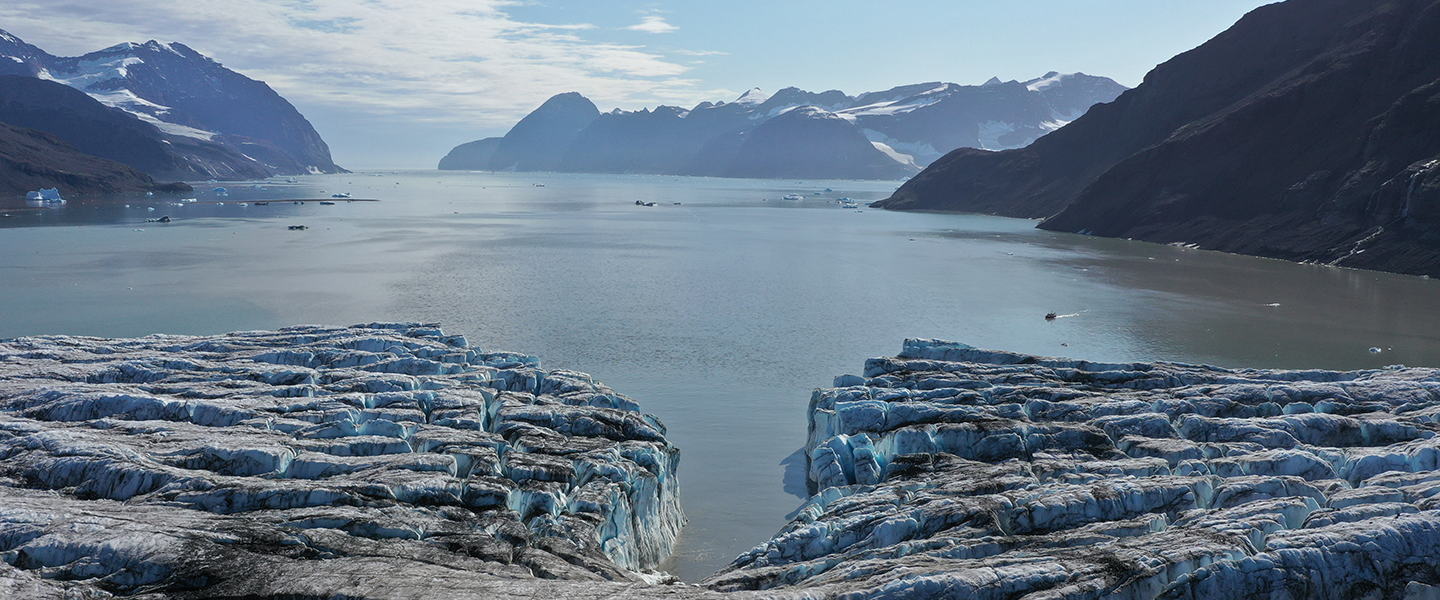
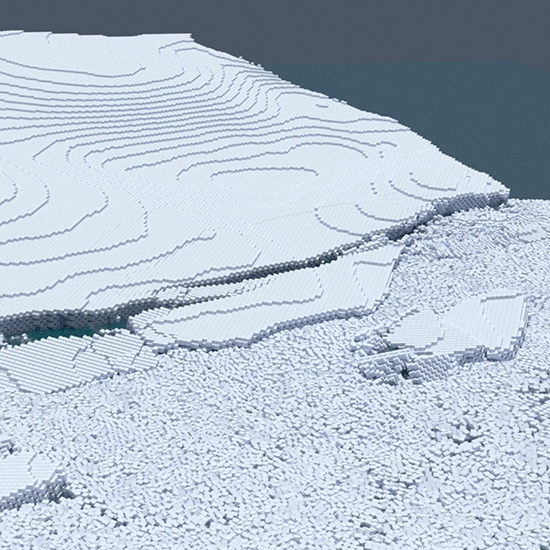
Half of the GIANT team will focus on building next-generation simulation tools to predict the future of Greenland glaciers.
These models will will build on the field observations captured from on top and in the water beside Greenland’s glaciers – as well as from satellites and drones.
They will reproduce: ice fracture and the calving of icebergs, glacier melting and turbulent meltwater flows, and the transport of warm water from the Atlantic towards glaciers.
By combining data from fieldwork, satellites, and existing climate models, we will create a more realistic view of how fjords evolve, and how those changes ripple through the North Atlantic.
Together, these tools will advance the UK Earth System Model (UKESM), which is the main UK model used to forecast future climate change. This will help refine projections of how Greenland’s melt could reshape global oceans and climate.
In parallel, the project will pioneer the development of an AI-driven early warning system for change in Greenland fjords. GIANT will develop fast-learning statistical emulators that are able to will spot subtle signals of glacier instability, updating forecasts in real time as new data arrives.
Modelling the system
- GIANT will use data on melting, fractures, and iceberg formation to refine models of how glaciers calve and lose mass. These improved models will better predict when and how ice breaks away into the ocean.
- By tracking meltwater plumes, turbulence, and heat flow, scientists will model how fjord currents move warm seawater toward glacier front, driving melting and undercutting beneath the ice.
- Data on freshwater and iceberg discharge will feel into ocean circulation models, showing how Greenland’s meltwater influences North Atlantic density, mixing and current strength.
Together these insights will enhance climate models, helping scientists identify potential tipping points where accelerated ice loos could disrupt ocean circulation, climate patterns and marine ecosystems.
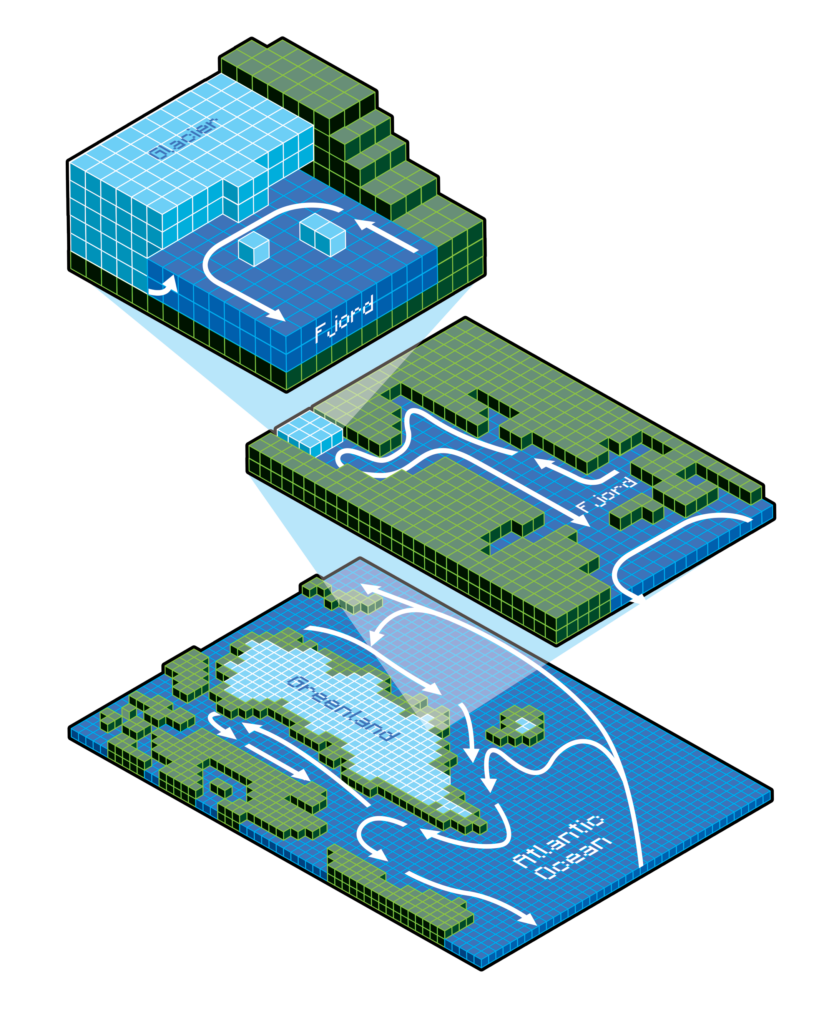
“Our new simulations will capture Greenland fjords in unprecedented precision, from a single crack in the ice all the way to the ocean currents in a whole fjord. The next-generation UK Earth System Model will be fully-equipped to predict how Greenland ice loss impacts global climate change.”

Dr Paul Holland
Computer Modeller, British Antarctic Survey
+ GIANT Co-Creator