
Investigating how the melting of Greenland’s ice sheet leads to Atlantic climate tipping points
We’re working to understand how the warming ocean is making Greenland’s fjord glaciers melt, fracture, and collapse into the ocean — and what this means for our global climate.
Greenland’s glaciers are losing ice at unprecedented rates.
Driven by warming oceans and atmosphere, the resulting flow of freshwater into the North Atlantic has the potential to disrupt and alter major ocean currents. This kind of abrupt and irreversible change to Earth’s system is known as a ‘tipping point’. It will have knock-on effects for important fish species, European weather and climate, and global sea-level rise.
GIANT aims to transform how we forecast ice loss in Greenland fjords, and improve early warning systems for tipping points that could reshape our planet’s climate.
It is one of the most ambitious initiatives ever attempted by the UK’s polar research community: led by British Antarctic Survey, with 15 collaborating institutions, five technology partners, and backed by the UK’s Advanced Research and Invention Agency.
Making field observations
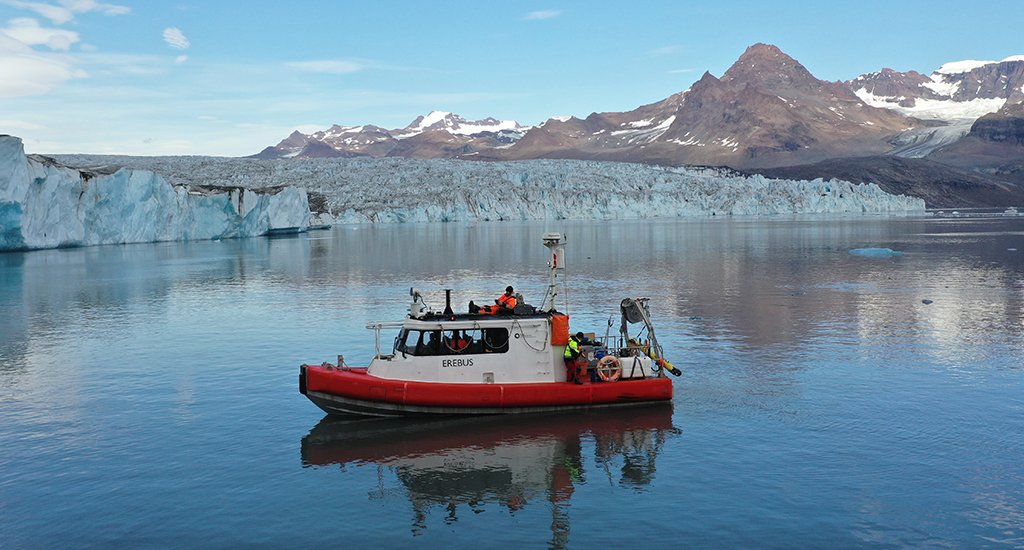
Through two major field campaigns in 2026 and 2027, scientists will study how Greenland’s ice sheet interacts with ocean waters using cutting-edge drones, marine robots, satellites and sensors.
GIANT will take researchers to the edge of the Greenland Ice Sheet — where towering glacier walls and vast floating ice shelves meet turbulent seas.
Simulating future change
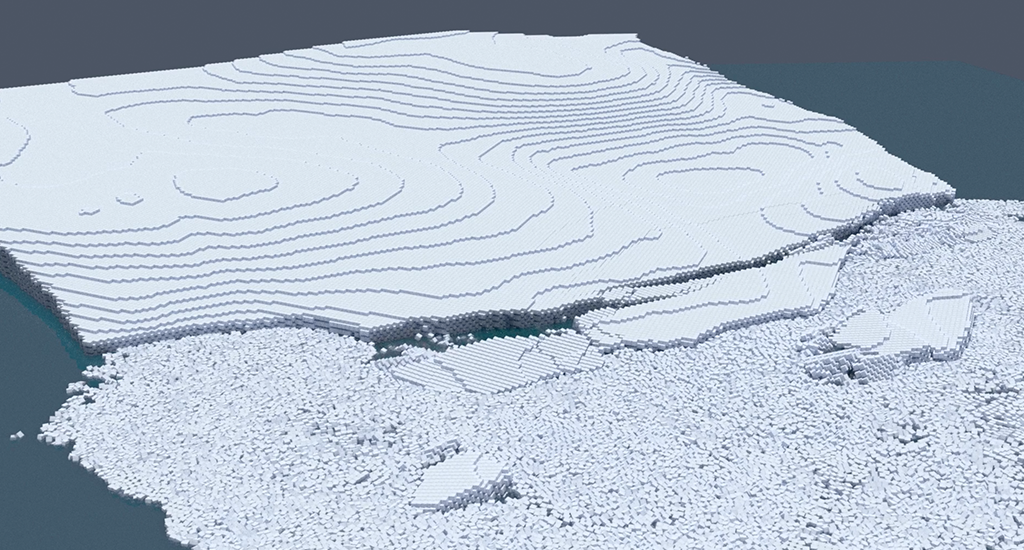
We will build next-generation computer modelling tools to predict the future of Greenland’s glaciers. Together, they will advance global models used to forecast climate change.
GIANT will also pioneer the development of an AI-driven early warning system for changes to glacier and ocean current stability. Our team are working together to work out the best way to do this — it’s an ambitious challenge.
Building community resilience
We are committed to working with Greenland’s local communities, whose lives and livelihoods are closely tied to the changing ocean and ice environment.
“We’re in a moment where our tools have finally caught up with our questions. With autonomous vehicles, advanced sensors, and powerful modelling — boosted by AI — we can explore glacier-ocean interactions in ways that were unimaginable just a few years ago.”

Dr Kelly Hogan
Marine Geophysicist, British Antarctic Survey
+ Lead Creator on GIANT
Frequently asked questions
What is GIANT?
GIANT stands for Greenland Ice sheet to AtlaNtic Tipping points from ice loss. It’s a £20m UK-led project exploring how Greenland’s glaciers melt and how that affects global ocean and climate systems.
Who is involved?
A team from the British Antarctic Survey (BAS) is leading GIANT, supported by the Advanced Research and Invention Agency (ARIA) under its Forecasting Tipping Points programme. GIANT brings together researchers from 15 collaborating institutions and five technology partners, spread across the UK, US and Europe.
Why study Greenland’s glaciers?
Greenland holds enough ice to raise sea level by over seven metres. If this fresh water was released into the Atlantic Ocean it would significantly disrupt the global ocean circulation and climate. Understanding how Greenland glaciers interact with the ocean helps scientists predict future changes in climate, sea level, and ocean circulation. This will help policymakers and people in government to make decisions about the best way to minimise these changes, and adapt to them.
What is a tipping point?
Most climate changes are gradual: they evolve over time, in line with increasing global temperatures, as the amount of greenhouse gases in the atmosphere rises. If we were to remove greenhouse gases from the atmosphere, these changes would reverse.
In contrast, climate ‘tipping points’ are fundamental changes to major aspects of the Earth system, which may be very difficult or impossible to reverse. While the changes may still take place slowly, these are impacts of warming where parts of the climate that are ‘tipped’ out of their current state into a fundamentally different state. They could remain in their altered state even after the initial causes are stopped or reversed.
What’s new about GIANT?
GIANT combines cutting-edge sensors, autonomous robots, satellites, computer simulations and artificial intelligence to study glacier-ocean interactions in fine detail.
Don’t we already know how glaciers behave?
Greenland’s glaciers are heavily fractured and are melted by the ocean in a unique coastline of over 200 narrow fjords. This distinct features mean that we need more information to model this system correctly. We need incredibly detailed information to understand the melting and cracking of the ice: in some places, we will be measuring processes at just a few millimetres from the glacier front.
When will the fieldwork take place?
Two major expeditions are planned — one in 2026 to vertical glacier faces near Kangerlussuaq Glacier, and one in 2027 to Petermann Glacier’s floating ice shelf.
How would this affect people?
Changes in Greenland’s ice affect sea levels, weather patterns, and fisheries — from the Arctic to Europe and beyond. GIANT’s findings will help policymakers, scientists and communities, to minimise ice loss and prepare for a changing world.